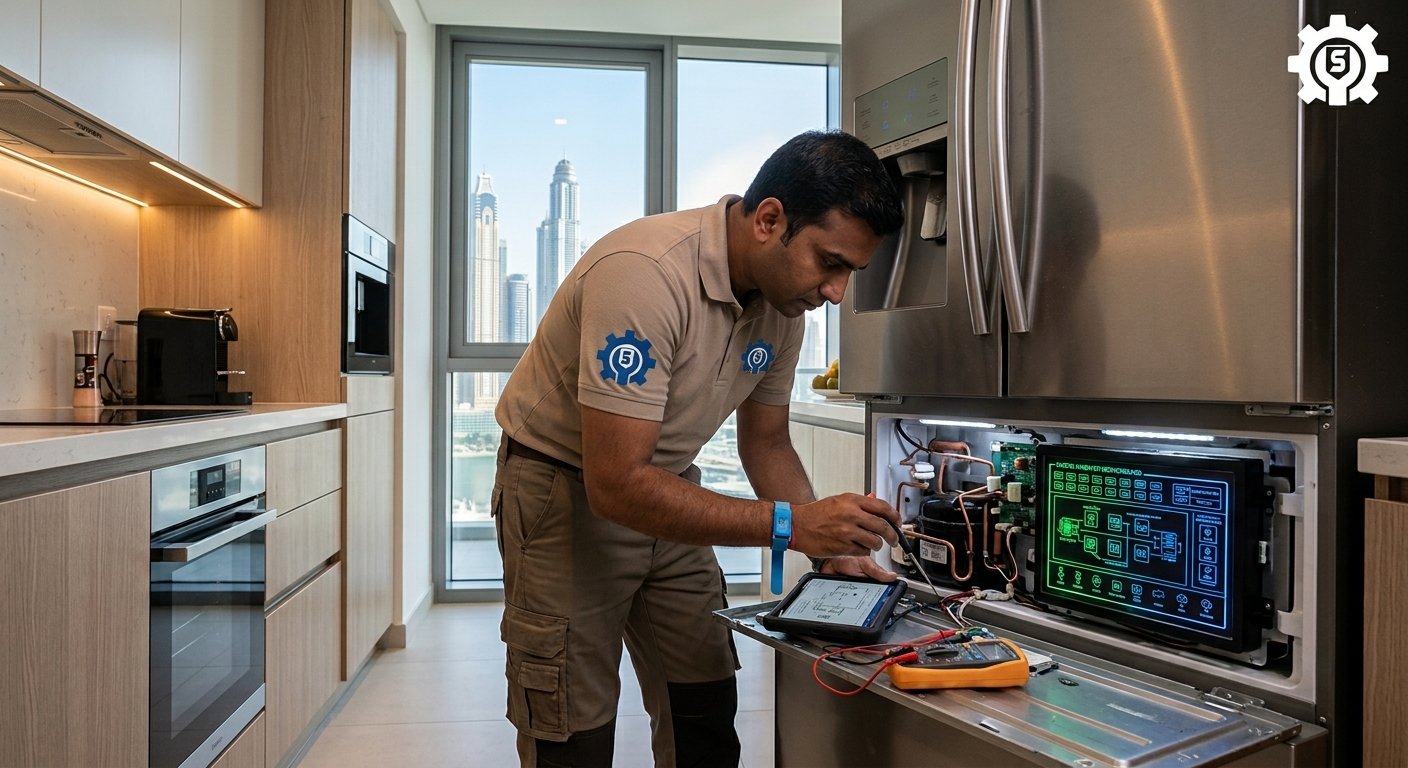

The refrigerator compressor is the component that keeps refrigerant moving through the appliance’s sealed cooling system. It draws in low-pressure refrigerant vapor and compresses it into a hotter, higher-pressure state. That pressure change enables the system to carry heat away from the refrigerator and freezer compartments. The compressor does not create cold air directly; instead, it supports a continuous cycle that transfers heat from inside the cabinet to the room.
After leaving the compressor, the refrigerant travels through the condenser coils, usually located beneath or behind the refrigerator. There, it releases heat and changes into a liquid. It then passes through an expansion device, such as a capillary tube, where its pressure drops. The colder refrigerant enters the evaporator coils inside the appliance and absorbs heat from the compartments as it evaporates. The cycle then returns refrigerant vapor to the compressor.
Other components help regulate and start this process. A thermostat or electronic control board monitors temperatures and signals when cooling is needed. A start relay and related electrical components provide the initial power needed to get the compressor running. Fans move air across the condenser and evaporator coils, supporting heat transfer. If any part of this system is not working properly, cooling may become weak or inconsistent.
Compressor trouble can produce symptoms such as warm compartments, repeated clicking, unusual humming, or a compressor that runs continuously. However, these signs are not proof that the compressor itself has failed. A defective start relay, dirty condenser coils, a malfunctioning fan, a temperature sensor issue, or a refrigerant leak can cause similar problems. In some cases, blocked airflow or a control fault may also prevent normal cooling.
For that reason, accurate diagnosis should come before deciding on refrigerator compressor repair or replacement. A qualified technician can inspect electrical components, verify operating pressures and temperatures, and check the sealed system for leaks or restrictions. Identifying the actual cause helps avoid replacing an expensive compressor unnecessarily and allows the repair plan to reflect the refrigerator’s condition, age, and overall value.
A refrigerator compressor problem may be suspected when the fresh-food and freezer compartments are both warmer than usual, even though the appliance is receiving power. You may notice food taking longer to chill, ice cream softening, or the temperature rising despite normal thermostat settings. A compressor that repeatedly clicks, hums briefly, then falls silent can also indicate trouble starting. These sounds may recur at intervals as the refrigerator attempts to restart, but noise alone cannot confirm that the compressor has failed.
Other possible clues include unusually long or nearly continuous run times, excessive heat around the compressor area, or a refrigerator that trips its circuit breaker. Some warmth during operation is normal, and extended running can occur in hot weather, after loading warm groceries, or when a door has been left open. A breaker trip, however, should be treated cautiously. Do not keep resetting it: repeated trips may indicate an electrical fault or another condition requiring professional attention. Unplug the unit if it is safe to do so, and arrange an assessment rather than continuing to operate it.
These symptoms are not definitive evidence of compressor failure. Dirty condenser coils can reduce heat transfer, while blocked vents or poor airflow may prevent cold air from circulating properly. A failed condenser or evaporator fan, a faulty start relay, or a control problem can also cause weak cooling, clicking, humming, or long run times. Before arranging service, note what you observe: which compartments are affected, whether the compressor attempts to start, how often sounds occur, and whether the problem follows a door opening or a change in room temperature. Record any warning lights or breaker trips as well. This information can help a technician distinguish a compressor fault from simpler or less costly causes. Avoid removing panels or handling electrical components unless you are qualified; refrigerator circuits can present shock and injury risks.
Before arranging refrigerator compressor repair, make a few basic checks that do not require opening the appliance or touching electrical components. Confirm that the refrigerator is receiving power: check that its plug is firmly connected and, if appropriate, verify the outlet using a safe method. Look for signs that a household breaker has tripped, but do not remove covers from the outlet or appliance. If the refrigerator has power, check the temperature controls and display. Settings may have been changed accidentally, or a control panel may have been set to a warmer temperature.
Make sure food packages are not blocking interior air vents, since restricted airflow can affect cooling. Check that both doors close fully and that nothing is preventing them from sealing. Inspect the door gaskets for visible gaps, dirt, or damage; cleaning an accessible gasket according to the manufacturer’s guidance may help it seal properly. If your model has accessible condenser coils, consult its manual for their location and approved cleaning method. Always unplug the refrigerator before cleaning accessible coils or other areas near moving or electrical parts. Do not pull apart panels to reach components that the manufacturer identifies as service-only.
Keep these checks limited to external settings and user-accessible areas. Do not remove sealed-system panels, handle refrigerant, probe live electrical parts, or attempt compressor wiring. These tasks can expose you to electric shock, damage the refrigerator, or create other safety risks, and should be left to a qualified technician. A compressor may feel hot during normal operation, so warmth alone does not establish that it has failed. Likewise, a click, hum, or other occasional startup sound is not definitive proof of compressor trouble. If the refrigerator continues to cool poorly after these preliminary checks, note any symptoms and when they occur, then contact a technician for diagnosis. Describe changes in temperature, unusual recurring sounds, and any recent power interruption; that information can help guide a safe inspection without requiring you to perform hazardous tests.
A professional service visit begins with a clear account of the cooling problem. The technician will ask when it started, whether temperatures fluctuate or remain high, and whether the refrigerator makes unusual clicking, humming, or buzzing sounds. Information about recent power interruptions, moves, repairs, and changes in use can help narrow the possibilities. The technician may also check the appliance’s age, model, temperature settings, and any displayed error codes before testing components.
Next, the technician inspects the refrigerator’s basic operating conditions. They may check that air vents are unobstructed, doors seal properly, and the condenser coils are not covered in dust or debris. Evaporator and condenser fans are examined for damage or restricted movement, while wiring and connectors are checked for looseness, scorching, or other visible signs of trouble. These steps matter because poor airflow, a failed fan, or a dirty coil can reduce cooling and make the compressor run excessively, even when the compressor itself is functional.
The technician then tests relevant controls and compressor start components. Depending on the appliance, this can include the thermostat or temperature sensor, electronic control board, start relay, overload protector, and capacitor where fitted. Electrical measurements and observations of start-up behavior help determine whether the compressor receives power and attempts to operate. A clicking sound, for example, is not by itself proof that the compressor has failed; a faulty relay or overload protector can produce similar symptoms.
If needed, the technician assesses compressor operation using appropriate electrical and refrigeration instruments, following the manufacturer’s service information. They consider whether the compressor starts, runs, and draws current as expected, while also looking for evidence of a restriction or refrigerant leak. A qualified technician distinguishes these issues from one another before recommending repair or replacement. Diagnosis of the sealed refrigeration system may require specialist tools, technical training, and regulated handling of refrigerant, so it is not a routine do-it-yourself inspection. The findings should be explained before work proceeds, including which tests support the diagnosis and whether other faults could affect the repair.
In most household refrigerators, a failed compressor is replaced as a complete component rather than opened and repaired internally. Compressors are sealed units, and internal repairs are generally impractical compared with installing a replacement. However, symptoms that resemble compressor failure can come from other components. A technician may find that a start relay, overload protector, wiring connection, or control issue is responsible; these parts can often be repaired or replaced separately. Confirming the cause before authorizing major work is therefore essential.
The repair decision depends on more than the compressor’s price. Consider the refrigerator’s age, overall condition, and expected remaining service life, as well as whether a compatible compressor is available. Check the appliance’s warranty and any separate parts or labor coverage, since terms may differ. Energy use also matters: an older refrigerator may cost more to operate than a newer, efficient model, although replacement involves its own purchase, delivery, and installation costs. The technician should also explain whether the work may require additional sealed-system service, such as addressing a refrigerant leak or replacing a filter-drier. Such work can affect both the repair scope and the likelihood of a lasting result.
Ask for a written estimate that itemizes parts, labor, refrigerant-related work, diagnostic charges, and warranty terms for the repair. Compare that estimate with the cost of suitable replacement appliances, including delivery and removal, and weigh both against the refrigerator’s condition and likely years of further use. There is no single cost percentage or threshold that makes repair the right choice for every household. A relatively recent appliance in good condition, with available parts and a clear diagnosis, may be a reasonable repair candidate. If the unit is near the end of its expected service life, has recurring problems, or needs uncertain additional sealed-system work, replacement may be more practical. A qualified technician can clarify the risks, but the final choice should reflect total cost, reliability, efficiency, and the appliance’s remaining useful life.
Compressor replacement is a sealed-system repair that requires specialized tools, technical training, and careful handling of refrigerant. Before work begins, the technician disconnects the refrigerator from its power supply and confirms the appliance is safe to service. Refrigerant is then recovered with approved equipment into an appropriate recovery container; it must not be vented. The technician identifies the failed compressor and related components, checks the appliance specifications, and assesses whether replacement is practical given the refrigerator’s age, condition, and repair cost.
After removing the old compressor, the technician prepares the tubing and sealed-system connections for installation of a compatible replacement. Connections are typically brazed using suitable materials and methods, while protecting nearby components from heat. The filter-drier is replaced as required because it captures moisture and contaminants that could otherwise damage the new compressor or obstruct the system. Once the connections are complete, the technician evacuates the system with a vacuum pump to remove air and moisture. The sealed system is then recharged with the refrigerant type and precise amount specified by the manufacturer.
Commissioning includes checks for leaks at repaired connections and verification that the compressor starts and runs correctly. The technician also checks relevant electrical operation, such as supply, controls, and starting components, and monitors temperatures and pressures as appropriate for the appliance and service procedure. Cooling performance may take time to stabilize, so the refrigerator’s operation is assessed against manufacturer guidance rather than judged only by an immediate temperature reading. A professional should explain any findings, the work performed, and any remaining concerns. Refrigerant handling and sealed-system repairs are regulated in many jurisdictions and require approved practices, equipment, and credentials. Because incorrect recovery, brazing, evacuation, or charging can create safety risks and cause further damage, this work should not be attempted by an unqualified person.
Refrigerator compressor repair estimates can differ substantially because the final price depends on more than the compressor itself. Brand and model affect parts availability and component cost, while the refrigerant used can influence the equipment and procedures required. Local labor rates, diagnostic fees, and the time needed to access the compressor also contribute. A straightforward replacement may cost less than work involving difficult access, discontinued parts, or additional sealed-system repairs.
Ask whether the technician has confirmed a failed compressor or is still investigating symptoms that could have other causes. A refrigerant leak, blocked tubing, or another sealed-system fault may require separate testing and repair; replacing a compressor alone may not restore reliable cooling if the underlying problem remains. Request an itemized estimate that distinguishes diagnosis, parts, labor, refrigerant, leak detection, and any additional work. Clarify whether the quote may change and whether you must approve extra charges before repairs proceed.
Before authorizing service, ask what warranty applies to both the replacement part and the labor, how long coverage lasts, and what exclusions or service-call charges may apply. Check whether the refrigerator is covered by a manufacturer warranty, retailer plan, or extended warranty, and confirm whether using an independent provider affects that coverage. Have the provider explain how refrigerant will be recovered, handled, and replaced, and whether leak testing is included when the sealed system is opened.
It is also useful to ask what happens if the repair does not bring the refrigerator back to the expected temperature. Find out whether follow-up diagnosis or corrective work is covered, and whether you would owe another visit fee. Refrigerant handling is regulated in many jurisdictions, so verify that the service provider holds the required license or certification locally. Clear answers and written terms make it easier to compare estimates and understand the risks before committing to a costly repair.
If your refrigerator is not holding a safe temperature, treat the situation as both an appliance problem and a food safety issue. Keep the doors closed as much as possible; each opening lets cold air escape and can accelerate warming. Avoid checking food by touch, since feel does not reliably indicate whether it has stayed cold enough. Place an appliance thermometer in the refrigerator and read it after the door has remained shut for a period, following the thermometer instructions. Use the reading to understand conditions, but do not assume one reading establishes how long food has been warm.
Move perishable items such as meat, seafood, dairy, eggs, and prepared leftovers to a functioning refrigerator if one is available. Otherwise, use an insulated cooler packed with ice or frozen gel packs, and keep it closed. Arrange food so it stays cold, and use a thermometer to monitor the cooler rather than relying on the ice’s appearance alone. Separate raw items from ready-to-eat food and prevent leaks from contaminating other contents. If cooling has been interrupted, make decisions about keeping or discarding food using current local public-health guidance; advice may depend on the food, temperatures, and duration of warming. For prolonged warming or uncertainty, consult health authorities rather than tasting food or relying on smell.
Do not continue operating a refrigerator that repeatedly trips a breaker, produces a burnt smell, sparks, becomes unusually hot, or shows visible electrical damage. Unplug it only if you can do so safely without touching damaged wiring or standing near water; otherwise, leave it alone and seek urgent help. Contact a qualified appliance repair professional promptly and describe the symptoms. Keep food protected while awaiting service, and avoid bypassing safety devices or opening sealed compressor or electrical components yourself. Ask the technician whether the refrigerator should remain disconnected and what steps are appropriate before diagnosis.
Routine care can reduce avoidable strain on a refrigerator’s cooling system, although it cannot prevent every compressor failure. Keep condenser coils and surrounding areas clean as directed in the manufacturer’s instructions; before cleaning, follow any guidance on safely disconnecting power. Maintain the recommended clearance around the appliance so air can circulate and heat can dissipate. Avoid blocking vents inside the refrigerator or freezer, since restricted airflow may contribute to uneven temperatures and longer operating cycles.
Where applicable, replace water and air filters on the schedule specified for the model. Inspect door gaskets periodically for gaps, cracks, or debris that could prevent a tight seal. A poorly sealing door allows warm, humid air to enter, making the appliance work harder to maintain its set temperature. Pay attention to changes such as persistent humming, unusually long run times, excess frost, or temperatures that fluctuate. Early assessment may identify a relatively simple issue before prolonged strain causes further damage, though only a qualified diagnosis can determine the cause.
When choosing a repair professional, look for relevant refrigerator and refrigeration-system experience, not only general appliance familiarity. Ask whether the technician has the appropriate credentials required in your area and can explain the diagnostic process. Request a clear written estimate that separates diagnostic fees, parts, labor, and any additional charges. A reliable provider should communicate findings transparently, explain repair options, and give a defined warranty covering the work and, where applicable, replacement parts. Clarify the warranty’s duration and terms before authorizing service.
Keep the estimate, invoice, diagnostic notes, and warranty information with the appliance’s service history. Record the refrigerator’s model and serial numbers, typically found on a label inside the fresh-food compartment or near a door frame. These details can help a technician identify compatible parts and review prior repairs. Good maintenance and organized records cannot guarantee that a compressor will last indefinitely, but they can support informed decisions and make future service more efficient.

refrigerator repair Downtown Dubai
appliance repair Emirates Hills
fridge repair Dubai Marina
home appliance repair JBR (Jumeirah Beach Residence)
refrigerator technician Arabian Ranches
fridge repair Jumeirah
appliance repair Business Bay
fridge maintenance Dubai Hills Estate
refrigerator repair Al Barari